Dose Rate and Safe Distance
Dose rate from a point source at a given distance, and the distance at which a target level is reached.
A screening tool; not an area classification.
The calculation assumes a point source and narrow beam; scatter and buildup are not included, so the real dose rate can be higher. Directional dependence of a collimated source is not modelled. Verify area boundaries and working distances by measurement.
7.5 µSv/h is a commonly used supervised-area figure; enter your own facility's limit.
Dose rate
30,5 mSv/h
- Distance to target
- 63,8 m
R = Γ · A / d²
Why a single source for the gamma constants?
Published values for the same nuclide differ by up to 45% — for Ir-192, figures between 109 and 160 µSv/h·GBq appear in the literature. The reason is that some tables give air kerma, some H*(10) and some effective dose, with different energy cut-offs and daughter-equilibrium treatment. Mixing sources produces inconsistent results, so both the gamma constants and the half-value layers come from one regulatory document, and the nuclide list is limited to that table.
CNSC REGDOC-2.5.5 — Design of Industrial Radiography InstallationsWhich instrument measures this?
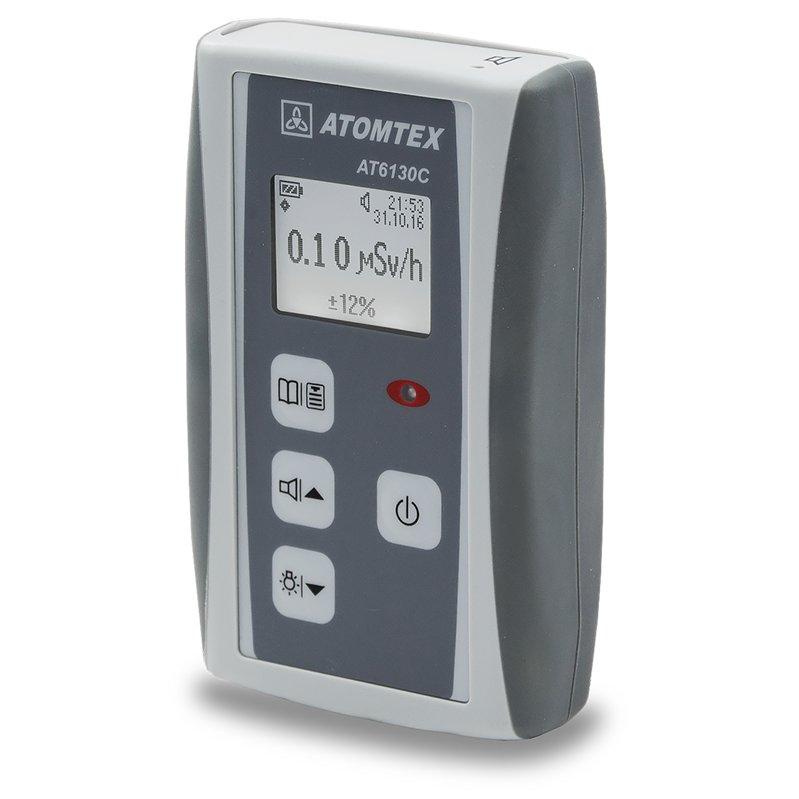
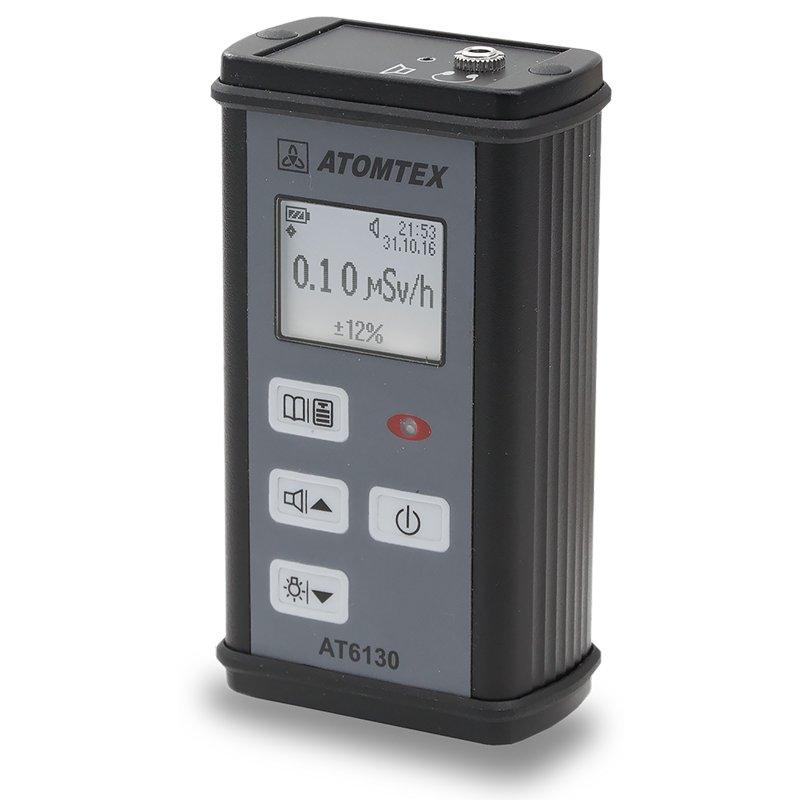
Instruments matched by catalogue attributes.